
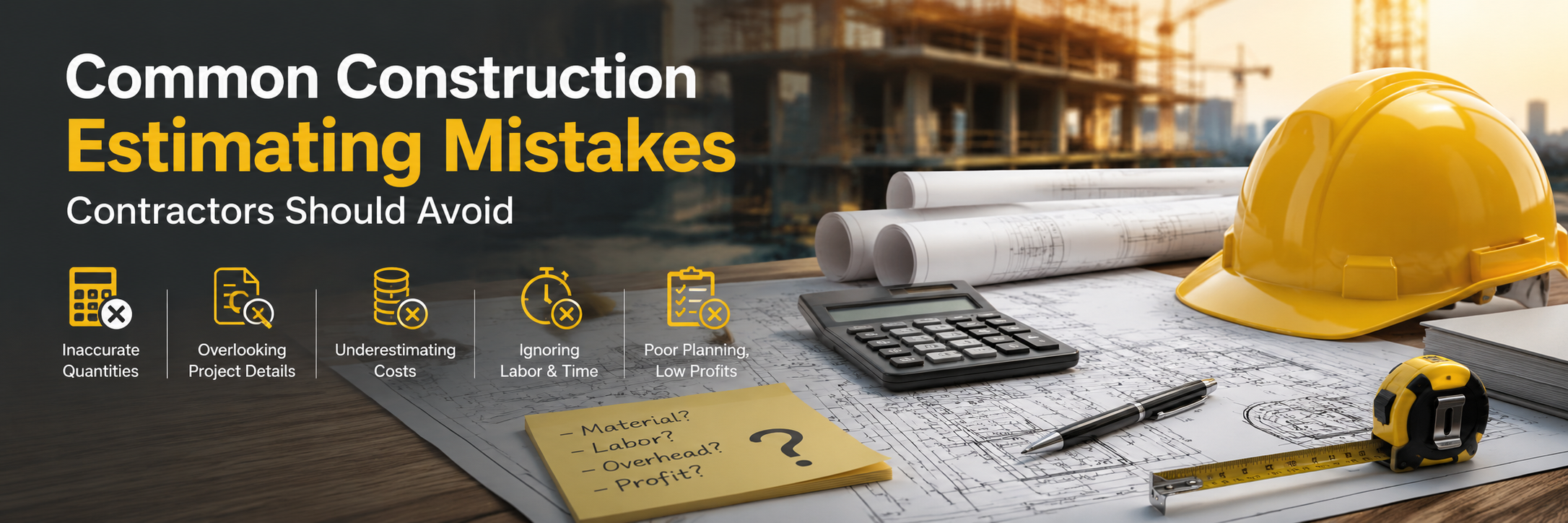
Common Construction Estimating Mistakes Contractors Should Avoid
Submitting a competitive construction bid requires more than experience and market knowledge. It demands a reliable estimating process built on accurate data, detailed project reviews, and realistic assumptions. Even minor errors during preconstruction can affect profitability, project timelines, and client relationships.
Many contractors lose money not because they lack technical expertise, but because of avoidable construction estimating mistakes. Missing quantities, outdated pricing, unrealistic labour assumptions, and overlooked indirect costs can quickly turn a profitable project into a financial challenge.
As construction projects become more complex and market conditions continue to shift, contractors need a structured estimating workflow that minimises risk and improves bidding accuracy. Understanding the most common estimating errors is the first step toward building a stronger preconstruction process.
Table of Contents
- Why Estimating Accuracy Matters in Construction
- The Most Common Construction Estimating Mistakes
- How Estimating Errors Impact Project Performance
- Best Practices to Improve Your Estimating Workflow
- When to Seek Professional Estimating Support
- FAQs

Why Estimating Accuracy Matters in Construction
Accurate estimates provide the foundation for every successful construction project. They influence bid pricing, resource allocation, procurement planning, scheduling decisions, and overall project profitability. Without reliable estimates, contractors risk making decisions based on assumptions rather than data.
Construction estimating is not simply about calculating costs. It involves understanding project scope, reviewing specifications, evaluating labour productivity, assessing market conditions, and identifying potential risks before construction begins. Every element of the estimate affects the final bid and the project’s financial performance.
In today’s competitive market, clients expect transparent pricing and predictable outcomes. Contractors who consistently deliver accurate estimates build stronger relationships, improve bid success rates, and create opportunities for long-term growth.
If you’re looking for a complete overview of estimating methods, processes, and best practices, read our Complete Guide To Construction Cost Estimation For Contractors.
The Most Common Construction Estimating Mistakes
Relying on Outdated Pricing Data
Material prices, labour rates, fuel costs, and equipment expenses can change rapidly due to inflation, supply chain disruptions, and regional market conditions. Contractors who rely on historical pricing without regular updates often submit inaccurate bids that fail to reflect current costs.
For example, a steel price increase of even a few percentage points can significantly affect the budget of a commercial project. Similarly, changes in local labour availability can increase wages and reduce productivity.
Maintaining updated cost databases, reviewing supplier quotes regularly, and monitoring market trends are essential steps for reducing cost estimation errors.
Performing Incomplete Quantity Takeoffs
Accurate quantity takeoffs are the foundation of reliable estimates. Missing materials, incorrect measurements, or overlooked scope items create budget gaps that become expensive problems during construction.
Many contractor estimating issues originate from rushed takeoffs or inconsistent measurement methods. Missing concrete volumes, underestimating drywall quantities, or overlooking finishing materials can reduce profit margins significantly.
Detailed takeoffs help contractors understand the true scope of work and improve pricing accuracy. Professional Quantity Takeoff Services can support contractors by delivering precise material calculations and reducing the risk of omissions.
Underestimating Labour Costs and Productivity
Labour is one of the largest cost components in most construction projects, yet it remains one of the most difficult areas to estimate accurately.
Many contractors use standard production rates without considering project-specific factors such as site conditions, weather, crew experience, overtime requirements, accessibility challenges, or local labour shortages.
A contractor estimating a high-rise renovation project, for example, may overlook productivity losses caused by restricted site access or limited working hours. These assumptions can create significant budget overruns once construction begins. Using historical performance data and adjusting productivity rates based on project conditions helps improve estimating accuracy.
Ignoring Indirect Costs and Contingencies
Focusing only on direct costs such as materials and labour is a common construction bid mistake. Indirect costs, including permits, supervision, insurance, temporary facilities, equipment maintenance, and administrative expenses, can significantly impact project budgets. Failing to account for these costs often leads to reduced profit margins.
Contractors should also include contingency allowances to manage unexpected conditions, design changes, or market fluctuations. While contingency planning may increase bid values slightly, it provides essential protection against unforeseen expenses. A realistic contingency budget demonstrates professionalism and improves long-term financial stability.
Misinterpreting Project Scope and Specifications
Construction documents often contain complex requirements that can be misunderstood or overlooked during estimating. Incomplete reviews of drawings, specifications, addenda, or contract documents frequently result in inaccurate estimating. Missing scope items, misunderstandings about material requirements, or failure to identify exclusions can create disputes and change orders later in the project.
Effective estimators spend time clarifying ambiguities, coordinating with design teams, and documenting assumptions before finalising estimates. Developing a standardised review process ensures that critical information is not missed during bid preparation.
Rushing the Estimating Workflow
Tight deadlines and high bid volumes often force contractors to accelerate the estimating process. Rushed estimates increase the likelihood of errors, omissions, and inconsistent pricing. When estimators skip peer reviews or rely on assumptions instead of verified data, bid quality suffers.
An effective estimating workflow includes time for document review, quantity takeoffs, pricing verification, risk assessment, and final quality checks. Establishing standard operating procedures helps contractors maintain consistency, even during busy periods.
How Estimating Errors Impact Project Performance
Estimating mistakes affect more than bid accuracy. They influence every stage of project delivery.
Underestimated projects often experience cash flow challenges, resource shortages, delayed procurement, and increased change orders. Teams may be forced to reduce quality, accelerate schedules, or absorb unexpected costs to keep projects moving. Overestimated bids create a different problem by reducing competitiveness and limiting business growth opportunities.
According to Autodesk Construction Resources, data-driven preconstruction processes help contractors improve forecasting accuracy and reduce project risks. Leading contractors recognise that accurate estimating is not just a preconstruction task. It is a strategic function that supports better decision-making throughout the project lifecycle.

Best Practices to Improve Your Estimating Workflow
Improving estimating accuracy requires a combination of process discipline, technology, and continuous learning. Contractors should maintain updated cost databases, standardise estimating templates, track actual project costs, and compare completed project performance against original estimates. This feedback loop helps identify recurring cost estimation errors and improve future estimates.
Technology also plays an important role. Modern estimating software streamlines quantity takeoffs, automates calculations, and provides access to current pricing information. However, software should support estimator expertise rather than replace it. Regular collaboration between estimators, project managers, procurement teams, and subcontractors improves communication and ensures estimates reflect real-world project conditions.
Industry insights from Dodge Construction Network Resources highlight the growing importance of digital preconstruction tools and integrated workflows in improving project outcomes. For contractors seeking additional support, professional Construction Cost Estimation Services can improve estimate quality, reduce workload, and increase bidding confidence.

When to Seek Professional Estimating Support
Many contractors experience periods where internal estimating resources become stretched due to increased bid opportunities or project complexity. Outsourcing estimating tasks provides access to experienced professionals, advanced software, and current market data without increasing fixed overhead costs.
Professional estimating support is particularly valuable when projects involve specialised trades, tight deadlines, complex scopes, or multiple simultaneous bids. External estimating teams can improve consistency, reduce inaccurate estimating, and help contractors focus on business development and project execution.
Partnering with experienced estimators does not replace internal expertise. Instead, it strengthens the overall estimating process and creates additional capacity for growth.
Frequently Asked Questions
Common construction estimating mistakes include incomplete quantity takeoffs, outdated pricing data, underestimated labour costs, overlooked indirect expenses, and rushed estimating workflows.
Estimating errors can lead to budget overruns, reduced profit margins, project delays, cash flow challenges, and lower bid success rates.
Quantity takeoffs provide accurate measurements of materials and labour requirements, forming the foundation of reliable cost estimates.
Contractors can improve accuracy by using updated pricing data, standardising estimating processes, tracking historical costs, and reviewing completed project performance.
Outsourcing estimating services can help contractors manage workload, access specialised expertise, improve estimate quality, and pursue more bidding opportunities.
Avoid Costly Estimating Mistakes
Reliable estimates help contractors submit competitive bids, protect profit margins, and improve project outcomes.
Explore our Construction Cost Estimation Services and Quantity Takeoff Services to strengthen your preconstruction process and reduce estimating risks.